
Older Air Conditioner Struggling Every Summer? Signs Replacement May Be Needed
Need air conditioning repair in California? Learn the warning signs of an aging AC, when repairs make sense, and when replacement may be worth considering.
Key Takeaways
- •Frequent breakdowns, rising energy bills, uneven cooling, and major component failures can signal that an older AC needs evaluation.
- •Age alone does not determine whether an air conditioner should be repaired or replaced.
- •Proper maintenance and airflow evaluation can uncover problems that may be repairable.
- •When replacement is necessary, proper sizing and installation are important for dependable long-term cooling.
An aging air conditioner can seem fine during mild weather and then struggle as soon as summer arrives. Longer cooling cycles, warm air, rising electricity bills, unusual noises, and repeated breakdowns are all signs worth investigating. Homeowners considering air conditioning repair in California should first determine whether the problem is a repairable component, an airflow issue, or evidence that the entire system is nearing the end of its useful service life.
What Are the Signs an Older AC May Need Replacement?
An older air conditioner may warrant replacement when it has frequent breakdowns, rising operating costs, declining comfort, or a major component failure, particularly when the equipment is already more than 10 years old.
Common warning signs include:
- •The system runs for long periods without adequately cooling the home.
- •Repair visits are becoming more frequent.
- •Energy bills are increasing without a clear household usage change.
- •Some rooms remain noticeably warmer than others.
- •The outdoor unit makes grinding, rattling, buzzing, or other unusual sounds.
- •The system repeatedly freezes, short-cycles, or struggles to start.
- •A major component such as the compressor or coil has developed a serious problem.
ENERGY STAR identifies equipment over 10 years old, frequent repairs, rising energy bills, and uneven indoor temperatures as reasons homeowners should consider having their cooling system evaluated.
Age alone, however, does not automatically mean replacement is necessary. A well-maintained older system with a relatively minor fault may still be a reasonable candidate for repair.
Why Does an Older Air Conditioner Struggle in Summer?
Summer exposes weaknesses that may remain unnoticed during cooler months. A dirty filter can restrict airflow, while clogged coils reduce the system's ability to transfer heat effectively. Refrigerant problems, failing electrical components, blocked condensate drains, duct leakage, and inadequate airflow can also reduce cooling performance.
The U.S. Department of Energy recommends routine maintenance, including appropriate filter care and periodic professional inspection of coils and other components, because neglected maintenance can contribute to poor performance and higher energy use.
Before assuming the equipment itself has failed, a technician should consider the complete cooling system. Ductwork, insulation, thermostat operation, airflow, and equipment sizing can all affect how comfortable a home feels.
Our related guide, Air Duct Inspection: Why It Matters for HVAC Performance, explains why duct condition should be considered when cooling performance changes.
When Should I Repair or Replace My Air Conditioner in California?
Repair is generally worth investigating when the system has a localized, repairable problem and remains in reasonable overall condition. Replacement becomes more relevant when several warning signs occur together or a major failure affects an aging system.
| Situation | What to consider |
|---|---|
| Minor electrical or mechanical fault | Repair may restore reliable operation |
| Dirty filter or coil | Maintenance may resolve performance problems |
| Airflow or duct problem | Inspect and correct the underlying issue |
| Refrigerant leak | Find and evaluate the leak rather than repeatedly adding refrigerant |
| Frequent repairs | Compare cumulative repair costs with replacement |
| Major compressor or coil failure | Evaluate system age, condition, warranty, and replacement cost |
| Older system with rising energy use | A replacement assessment may make sense |
A useful rule of thumb is to avoid making the decision from one factor alone. Consider age + repair history + operating performance + repair cost + overall equipment condition. That combination gives a more realistic picture than simply asking how old the unit is.
If refrigerant work is required, homeowners should also use appropriately certified professionals. The EPA requires Section 608 certification for technicians whose work on stationary air-conditioning equipment could release refrigerant.
Can Maintenance Help an Older AC Last Longer?
Yes. Regular air conditioner maintenance in California can identify developing problems before they become major summer breakdowns, although maintenance cannot prevent age-related component failure indefinitely.
Practical maintenance should include:
- Checking or replacing filters according to the system and household conditions.
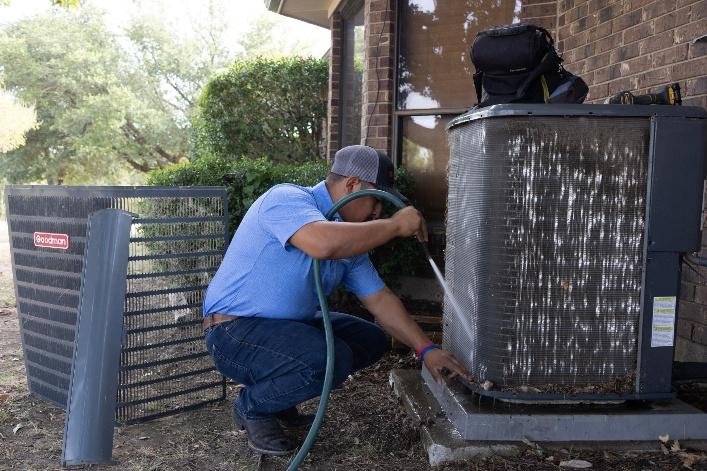
- Keeping the outdoor unit clear of leaves, dirt, and other obstructions.
- Inspecting coils and electrical components.
- Checking refrigerant-related performance for appropriate operation.
- Evaluating airflow and ductwork when rooms cool unevenly.
- Checking condensate drainage and other components during professional service.
Maintenance is particularly useful before peak summer demand. Finding a weak capacitor, restricted coil, electrical issue, or airflow problem in spring gives homeowners more time to decide whether a repair is sufficient or whether replacement planning is appropriate.
What Should You Consider Before Replacing an Older AC?
Replacement should involve more than choosing a new outdoor unit. The home's cooling requirements, equipment sizing, ductwork, efficiency, installation conditions, and compatibility all deserve attention.
If replacement is appropriate, professional AC installation in California can provide an opportunity to address problems that may have contributed to poor performance with the old system. Proper sizing is especially important because a larger system is not automatically better. An incorrectly sized system can affect comfort, cycling, humidity control, and operating performance.
Conclusion: Make the Decision From the System's Condition
An older AC that struggles every summer deserves a proper diagnosis rather than an automatic replacement or repeated temporary repair. If the problem is isolated and the equipment remains sound, repair may restore dependable cooling. If the system is aging, requires frequent repairs, consumes more energy, and has major component problems, replacement may deserve closer consideration.
For homeowners evaluating air conditioning repair in California, the most useful first step is a complete assessment of the equipment and airflow. Evolution Heating & Cooling can help Central Valley homeowners understand the condition of their system and the available repair or replacement options.
Ready to understand why your older AC is struggling? Contact Evolution Heating & Cooling for professional cooling diagnostics and discuss whether repair or replacement makes sense for your home.
Contact Evolution Heating & Cooling
Get professional cooling diagnostics for your older AC.
Frequently Asked Questions
1. How long does a residential air conditioner typically last?
A central air conditioner can provide many years of service, but lifespan varies with installation quality, usage, climate, maintenance, and equipment condition. Age should be considered alongside performance and repair history.
2. Should I repair an AC that is more than 10 years old?
Not necessarily. A 10-year-old system may still be worth repairing if the fault is relatively minor and the equipment remains in good condition. However, frequent repairs or declining performance can justify a replacement evaluation.
3. Why does my AC work in spring but struggle in summer?
Higher outdoor temperatures place greater demand on the cooling system. Weak components, dirty coils, restricted airflow, duct problems, or refrigerant issues may become more noticeable when the system operates for longer periods.
4. Can poor ductwork make an older AC seem worse than it is?
Yes. Leaking, damaged, poorly insulated, or restricted ducts can reduce how effectively conditioned air reaches rooms. A complete diagnosis should consider ductwork as well as the AC equipment.