
Salida, Stanislaus County, HVAC Guide
Salida HVAC Maintenance: Why Spring Service Isn't Optional
Salida's Highway 99 dust and Central Valley heat make spring AC service critical. See what a tune-up prevents, when to book it, and what a neglected system really costs in efficiency.
Key Takeaways
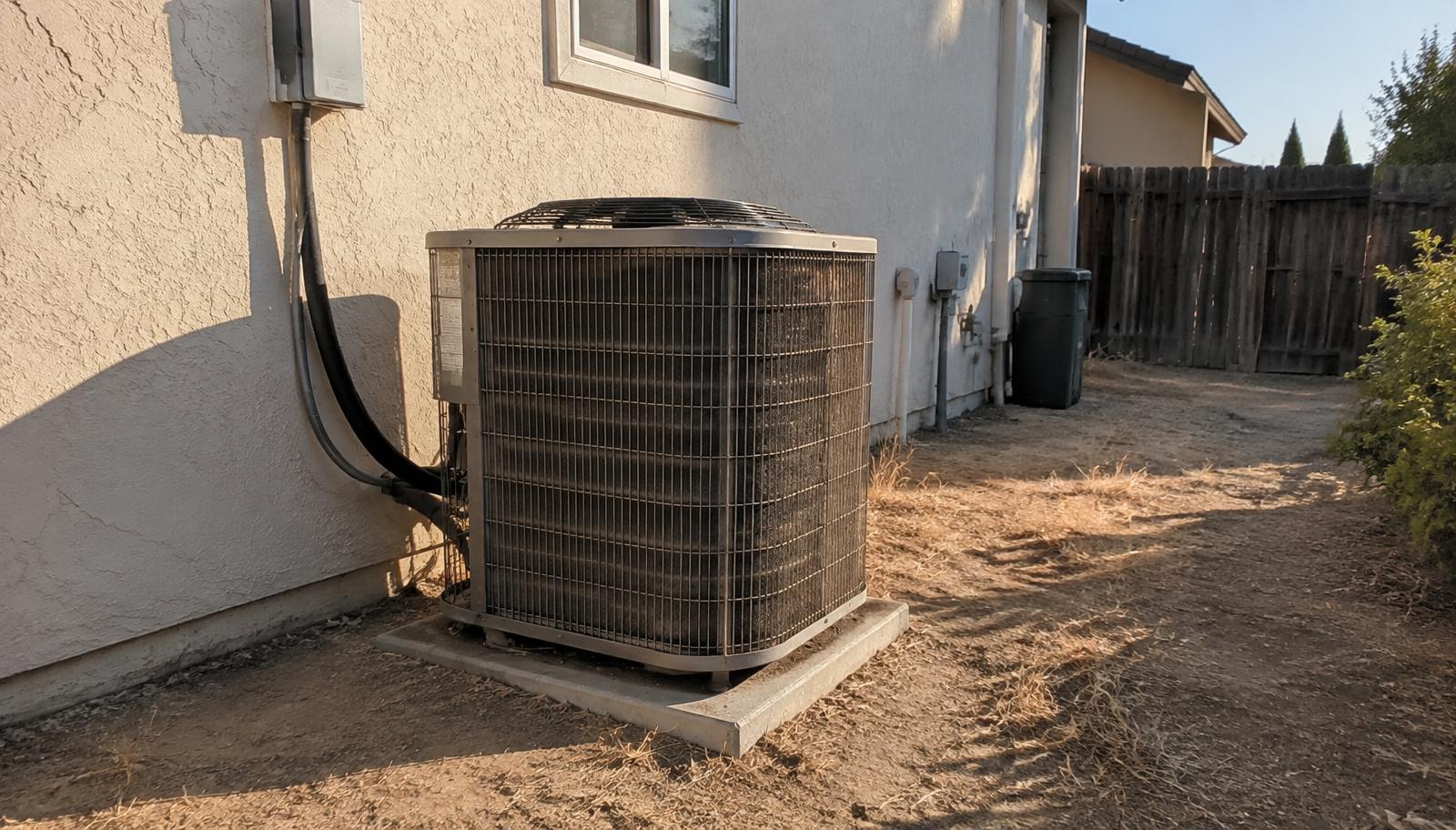
- • Salida's proximity to Highway 99 and the industrial corridor means outdoor coils collect dust and grit faster than equipment elsewhere in Stanislaus County.
- • A dirty condenser coil can raise compressor energy use by roughly 30%, and neglected coils can cut cooling capacity by even more.
- • March through April is the ideal window to schedule spring service before demand spikes and before the season's first 90°F day.
- • Two-story Salida homes often see bigger comfort gains from balanced dampers and a properly programmed thermostat than from a larger system.
- • On any system over 5 years old, annual maintenance reliably pays back in efficiency, equipment life, and preserved warranty coverage.
Why Salida's Location Puts Extra Stress on Your AC
Salida sits right along one of the busiest stretches of the Highway 99 corridor, and that location comes with a trade-off homeowners here don't always expect: outdoor condenser units in Salida pick up more airborne dust and grit in a single season than equivalent equipment installed further from the industrial corridor. That buildup goes straight after the coil's ability to release heat, which is exactly why demand for air conditioning repair in California spikes across Salida during the first real heat wave of the year systems that skipped spring service are already running at a deficit before summer even starts.
That's the pattern we see every spring: the AC that quietly loses capacity in April becomes the AC that fails outright on a 105°F afternoon in July.
What Dust and Neglect Actually Do to Your System
A little grime doesn't sound like much, but coil performance is surprisingly sensitive to it. Airflow restriction, reduced heat transfer, and higher compressor strain all compound on each other, and the efficiency losses are well documented by independent researchers and the U.S. Department of Energy.
Documented Efficiency Impact of Neglected AC Components
| Neglected Component | What It Does | Documented Efficiency Impact |
|---|---|---|
| Dirty air filter | Restricts airflow, forces the system to work harder | 5%–15% increase in energy use |
| Dirty evaporator coil | Reduces the coil's heat-absorbing capacity | Up to 21% drop in cooling efficiency |
| Dirty condenser coil | Limits how well heat releases outdoors | ~30% increase in compressor energy use |
| Bent coil fins | Blocks airflow across the coil surface | Further reduces heat transfer efficiency |
For a full breakdown of how filters, coils, and fins affect performance, the U.S. Department of Energy's guide to maintaining your air conditioner is a useful reference.
Two-Story Homes: The Upstairs Comfort Problem
Salida's housing stock is a mix of older mid-century homes with retrofitted central air and newer two-story tract developments and each brings its own comfort complaint. In the retrofit homes, ductwork was often added after the fact and isn't always sized correctly for the space. In two-story tract homes, the upstairs is almost always the room that runs warm, since heat naturally rises and a single thermostat downstairs can't account for it.
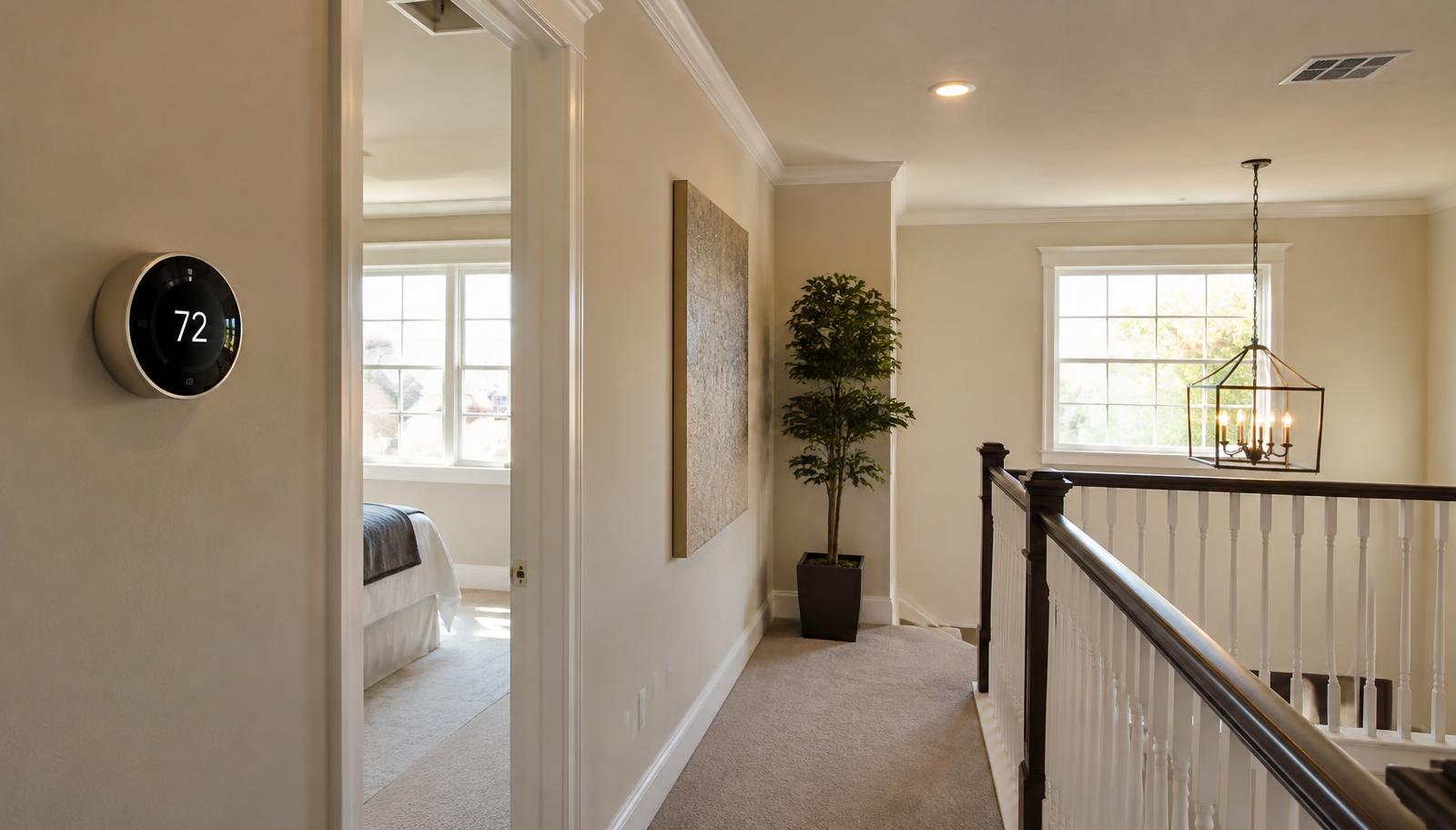
In our experience, the fix isn't usually a bigger system. Balancing the dampers that control airflow to each room, combined with a properly programmed thermostat schedule that anticipates the afternoon heat load upstairs, delivers more noticeable comfort improvement than most homeowners expect often without touching the equipment itself.
When to Schedule Spring Service
Timing matters more than most homeowners realize. Book too late and you're competing with everyone else's emergency calls once the heat arrives.
Salida Spring Service Timing Guide
| Timeframe | What's Happening |
|---|---|
| March | Technicians have the most open availability before seasonal demand builds |
| April | Ideal final window typically before the Valley's first 90°F day |
| May–June | Still workable, but scheduling windows get tighter as temperatures climb |
| July and later | Reactive territory same-day and emergency repair calls become common |
ENERGY STAR's central air conditioner guidance echoes the same advice: a system serviced before peak season consistently performs closer to its rated efficiency than one serviced reactively mid-summer.
What a Proper Spring Tune-Up Includes
A real spring service isn't a quick glance at the outdoor unit it's a short, specific checklist that catches the issues most likely to cause a summer breakdown:
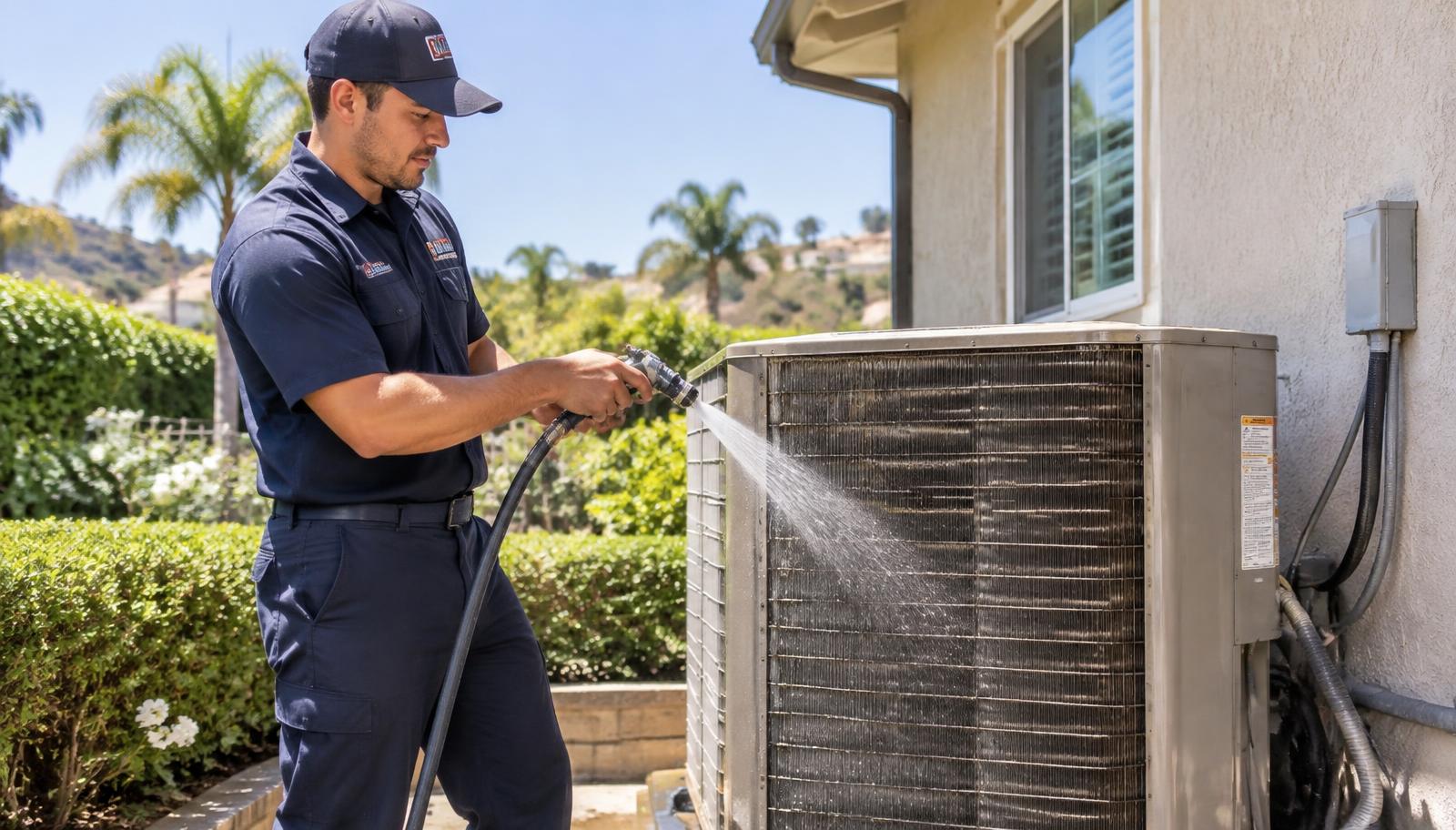
- • Coil rinse to clear the dust and grit that builds up along the Highway 99 corridor
- • Capacitor test, since a weakening capacitor is one of the most common causes of a no-cool emergency call
- • Refrigerant level check, because incorrect charge quietly reduces both efficiency and cooling capacity
- • Electrical connection and control check to confirm the system starts, runs, and shuts off safely
Most of this takes about 30 minutes per system a small investment against the alternative of a mid-July breakdown, when technicians and parts are hardest to schedule.
The Evolution Heating & Cooling Difference
Salida homeowners deal with a dust load and housing mix that a generic HVAC checklist doesn't account for. That's the gap Evolution Heating & Cooling closes every spring across Stanislaus County licensed, insured technicians who know which Salida homes need extra coil attention and which two-story layouts need damper balancing before they ever knock on the door.
Book your Salida spring AC tune-up
Get ahead of the first heat wave. Call (209) 216-7240 or request service on our contact page.
How often should I get my AC serviced in California's Central Valley?
Once a year is the standard recommendation, ideally in spring before peak cooling season. Homes near dust-heavy areas like Salida's industrial corridor may benefit from checking coil condition more frequently.
What does a spring AC tune-up actually include?
A proper tune-up covers a coil rinse, capacitor test, refrigerant level check, and electrical and control inspection the combination most likely to catch a problem before it becomes a summer breakdown.
Can dust and dirty coils really cause an AC to fail in summer?
Yes. Dirty coils force the compressor to work harder for the same cooling output, and that added strain is a common contributor to mid-summer breakdowns often on the hottest, highest-demand days of the year.
Is annual HVAC maintenance worth it if my system is still under warranty?
Yes. Many manufacturer warranties require documented annual maintenance to stay valid, and on any system over five years old, regular service also protects efficiency and extends equipment life.