
Smart Thermostat Installation: Everything Homeowners Should Know
Planning thermostat installation in California? Learn how smart thermostats work, check compatibility, understand wiring, costs, setup, and replacement decisions.
Key Takeaways
- • A smart thermostat is only useful when it is correctly matched and configured for your HVAC system.
- • Before installation, check system compatibility, wiring, power requirements, equipment type, and whether zoning or multiple stages are involved.
- • Smart controls can improve convenience and potentially reduce heating and cooling runtime, but results depend on the home, equipment, schedule, and thermostat.
- • Professional setup can help prevent common problems such as incorrect wiring, incompatible equipment settings, and incomplete configuration.
A thermostat is small, but it has a surprisingly important job: telling your HVAC system when to run and when to stop. So, if you are considering thermostat installation in California, simply choosing the most popular smart model is not necessarily the smartest first step.
The real question is whether the thermostat works properly with your equipment and household routine. From C-wires and heat pumps to remote control and equipment staging, here is what homeowners should know before making the switch.
What Makes a Thermostat “Smart”?
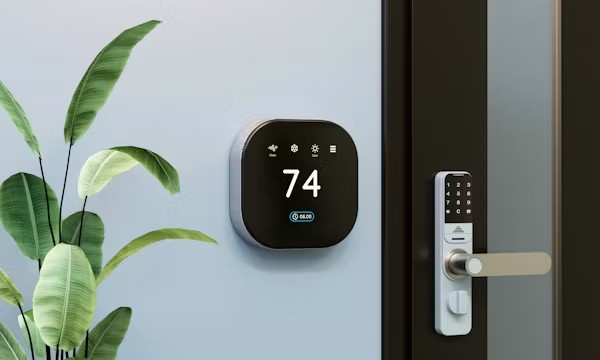
A smart thermostat connects your heating and cooling controls with software, sensors, and often a mobile app.
Depending on the model, it may offer features such as:
- • Remote temperature adjustments
- • Automatic scheduling
- • Occupancy or activity detection
- • Geofencing
- • Energy-use information
- • Learning features
- • Multiple temperature sensors
- • Alerts and equipment notifications
ENERGY STAR-certified smart thermostats are independently evaluated using real-world field data to verify energy-saving performance. They can also provide information about HVAC operation and allow users to create schedules.
Is Your HVAC System Compatible?
This is the part homeowners often discover too late.
A thermostat is a control device, not a universal plug-and-play accessory. Compatibility can depend on the type of HVAC equipment you have and how that equipment is wired.
Before buying one, identify whether your home uses:
- • Central air conditioning
- • A furnace and air conditioner
- • A heat pump
- • A multi-stage system
- • A zoned HVAC system
- • Another specialized setup
A heat pump, for example, may require a different configuration than a conventional heating and cooling system. The same applies to multi-stage equipment. If the thermostat is not configured to communicate correctly with the available stages, you may not be getting the control your system was designed to provide.
Does Your Home Need a C-Wire?
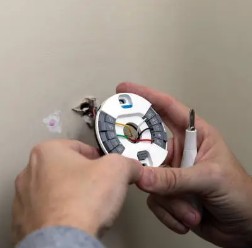
The C-wire question has become almost unavoidable in smart thermostat shopping. A C-wire, or common wire, provides continuous power to many thermostats. Some smart models can operate without one, while others require it or use alternative power methods.
Do not assume that seeing several wires behind the existing thermostat means your new thermostat will be compatible.
Before installation, check:
- How many wires are present?
- What terminals are they connected to?
- What HVAC equipment do they control?
- Does the selected thermostat require a C-wire?
- If one is missing, can one be added safely?
Professional installation can be particularly useful when a C-wire needs to be added, or existing wiring needs to be evaluated.
Smart Thermostat Installation in California: What Should You Consider?
California homes can have very different heating and cooling needs depending on location, construction, equipment, and daily routines.
Rather than choosing a thermostat based solely on its app or appearance, think about how your household actually operates.
Do you leave home for several hours each day? Do different family members prefer different temperatures? Is your HVAC system a heat pump? Do you have multiple zones?
These questions can matter more than having the longest list of “smart” features.
It is also worth checking whether your utility offers current incentives or programs for qualifying smart thermostats. Programs can change, so verify eligibility and terms before making a purchase.
Is Upgrading to a Smart Thermostat Worth It?
Yes, it can be particularly for households that can benefit from scheduling, remote control, occupancy-based adjustments, or better visibility into HVAC operation. ENERGY STAR reports that certified smart thermostats save approximately 8% of heating and cooling costs on average, although actual savings vary by home and usage.
The biggest benefit may not be a dramatic change to your monthly bill. It can be eliminating the need to remember every temperature adjustment yourself.
A household with predictable work and school schedules, for instance, can automate temperature changes instead of manually adjusting the thermostat every morning and evening. If you are interested in broader ways to manage household energy use, the U.S. Department of Energy also provides guidance on home energy efficiency and heating and cooling controls.
When Does Thermostat Replacement Make More Sense?
Not every thermostat needs to become “smart.” If your existing thermostat is unreliable, outdated, difficult to program, or incompatible with your current HVAC equipment, thermostat replacement in California may make sense even if advanced smart features are not your priority. Replacement can also be worth considering when:
- • The display is failing.
- • Temperature readings appear inaccurate.
- • The thermostat does not properly control the HVAC system.
- • You want remote access.
- • Your HVAC equipment has changed.
- • You need better scheduling or zoning controls.
The goal should be choosing the right control for the system, not buying technology simply because it is newer.
Look Beyond the Thermostat on the Box
The installation itself can determine whether you actually get the benefits promised by the device.
Evolution Heating & Cooling provides smart thermostat installation along with multi-stage, heat pump, and zoning control setup. Its thermostat service specifically includes compatibility checks, wiring assessment, C-wire installation when needed, system-specific configuration, and testing of settings such as stages, lockouts, and fan modes.
The company installs systems from brands including ecobee, Nest, Honeywell, and Sensi, and provides setup and homeowner guidance rather than leaving the thermostat on generic defaults.
For homeowners comparing thermostat installation in California options, that distinction matters. The thermostat is only one part of the equation; the compatibility check, wiring, configuration, and final testing are what turn the device into a properly functioning HVAC control.
Ready for a Properly Installed Smart Thermostat?
Get a compatibility check, correct wiring, and system-specific configuration from our local HVAC team.
Can I install a smart thermostat myself?
Some systems are straightforward, but compatibility and wiring requirements vary. If you have a heat pump, multi-stage system, zoning, or uncertain wiring, professional installation can help avoid configuration problems.
How do I know if I have a C-wire?
You can inspect the wiring behind your existing thermostat, but the presence of a wire does not automatically mean it is being used as a C-wire. The terminal connections and HVAC system should be verified.
Will a smart thermostat work with a heat pump?
Many smart thermostats support heat pumps, but compatibility and configuration requirements vary by model and equipment. Check both before purchasing.
Does a smart thermostat automatically save money?
Not automatically. Certified models can demonstrate energy savings, but results vary depending on the home, equipment, schedule, climate, and how the thermostat is used.
Should I replace my thermostat when replacing my HVAC system?
It can be worth evaluating at the same time. New HVAC equipment may have different control requirements or features that an older thermostat cannot fully support.