
What Turlock Homeowners Actually Need to Do Before the First 100°F Day
We pull condensers out of bushes, find melted contactors, and rescue a lot of overworked A/Cs every June. Here's what would have prevented most of those calls, written by techs who live here.
Why the calls always come in the same week
Every spring around late March, a customer in the Northwood subdivision calls and says the same thing: "It worked fine last year, but now it's just blowing warm air." Nine times out of ten, the system didn't fail overnight. It limped through the last 110°F week of September, sat untouched all winter, and the first hot afternoon of the year is when the weakest part finally gives out.
Turlock summers don't sneak up. They show up in May and don't quit until October. The homes that stay cool, and the systems that last 15 years instead of 9, all have one thing in common: the homeowner handles a small handful of things before Memorial Day. None of it takes more than a Saturday morning.
Give your condenser room to breathe
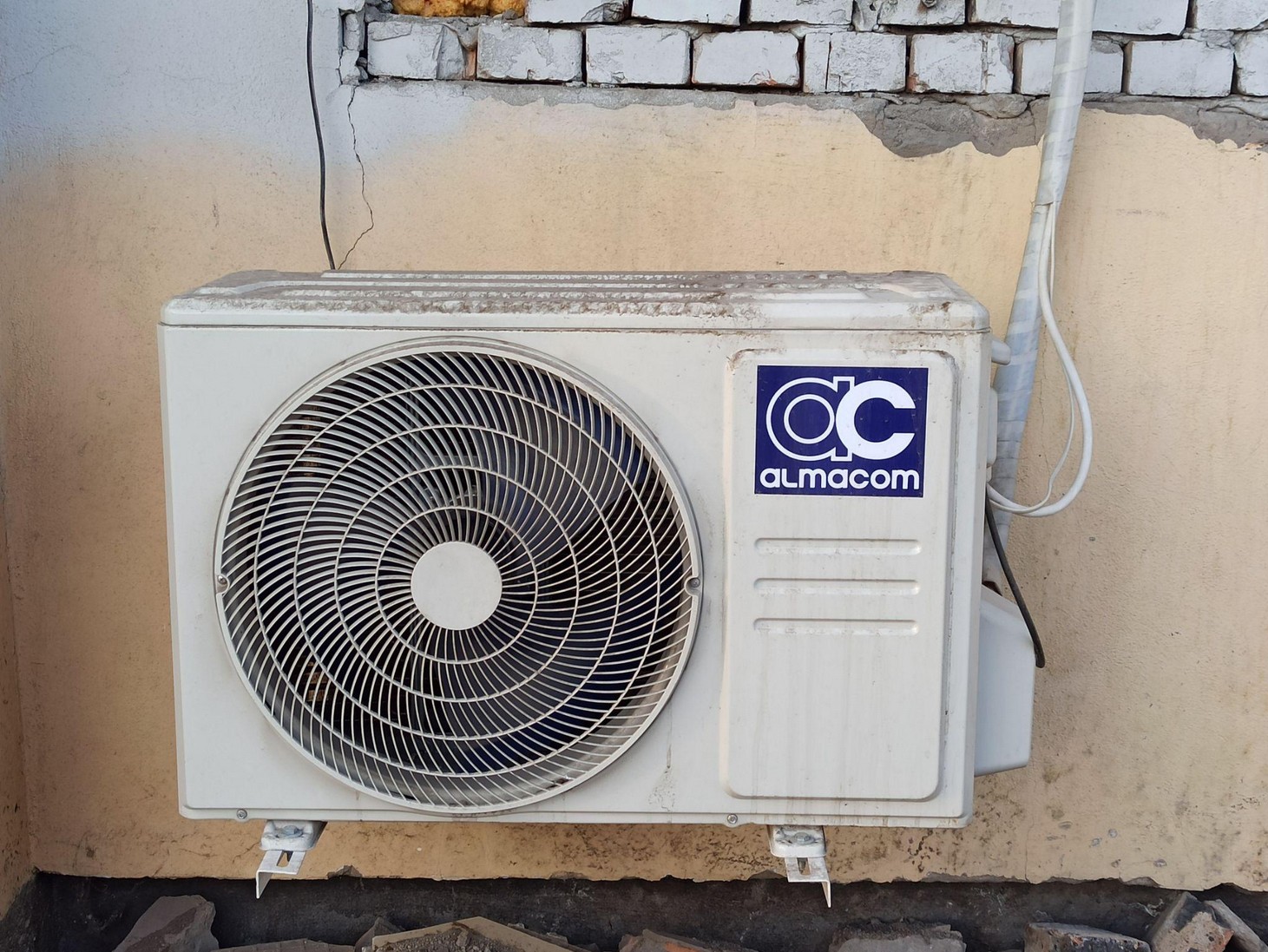
Start with the condenser unit, the metal box sitting on the side of your house. If you live in one of the older neighborhoods off Geer Road or out toward Crowell, there's a real chance it's tucked behind an oleander hedge or a lattice fence. Nobody wants to look at it, but that unit needs at least two feet of clear air on every side and four feet above it.
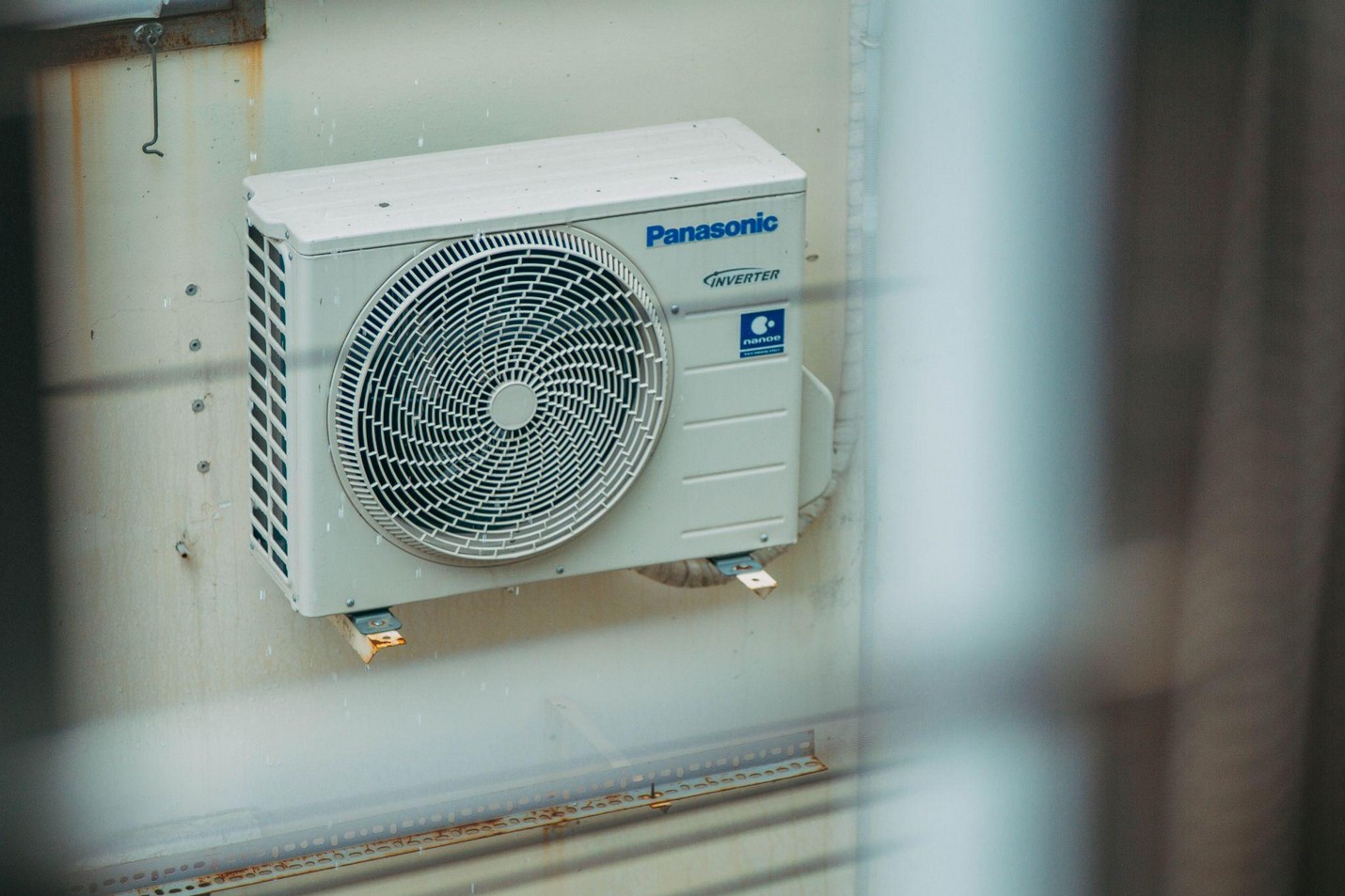
When airflow is choked, the compressor runs hotter, draws more amps, and loses years of lifespan for every summer it fights for air. Cut back anything growing into it, and pull out the cottonwood fluff that packs the coil fins by April. If you can see daylight through the fins from the inside, it's clean enough.
Rinse the coil before it clogs
Next, look at the coil itself. Grab a garden hose, not a pressure washer, which bends the fins flat, and rinse from the inside out if you can reach it, otherwise from the outside. A surprising amount of Turlock yard debris ends up wedged in there: grass clippings, dryer lint blown over the fence, pollen, and the fine layer of almond-bloom dust that shows up every February.
A blocked coil is the single most common reason we see refrigerant pressures running high in May. It's also the cheapest thing in the entire system to fix yourself.
Change the filter, and actually track when
Now the part most people skip: change the filter and write the date on it. The filter slot is usually in the ceiling of a hallway or the return grille near the thermostat. If you can't remember the last time you swapped it, it's overdue.
A 1-inch pleated filter in a Turlock home should be replaced every 60 days during summer, sometimes every 30 if you have dogs or live near an open field. A media filter, the thicker 4- or 5-inch ones in the cabinet next to the furnace, lasts six months to a year, but check it anyway. If it looks like a gray pancake, it's choking your system. If airflow still feels restricted after replacing the filter, it may be time to schedule air duct cleaning to remove dust and debris that can affect your HVAC system's performance.
Check the indoor unit for two warning signs
Walk into the garage or attic and look at the indoor unit. You're not diagnosing anything, just checking two things.
First, is the drain line dripping into a pan? Some condensate is normal in a humid week, but a constantly full pan usually means the line is partially clogged with algae. Pour about a cup of distilled white vinegar into the access port, usually a capped T-fitting on the PVC line near the air handler. That alone prevents the most common July emergency call: the safety float switch shutting the system off because the drain pan overflowed.
Second, is there rust streaking down from the heat exchanger, or insulation that looks soaked? Either one is worth a call before summer, not during.
Set the thermostat for reality, not a fantasy
We see a lot of Nest and Ecobee installs in newer Turlock homes scheduled to drop to 68°F at 5pm. On a 105°F day, your A/C generally cannot maintain an indoor temperature that's 37°F below the outdoor temperature, and it will run nonstop trying.
The general rule here is that residential systems can hold an indoor temperature roughly 20-22°F below the outdoor temperature. So on the worst day of the year, 78-80°F is the realistic floor. If you want it cooler, pre-cool the house in the morning while it's still in the 70s outside and let the system coast through the afternoon. Your bill drops, your equipment lasts longer, and you stop hearing it strain at 4pm.
If your system is aging, don't wait until it fails
If your system is over 12 years old and you've been nursing it through the last few summers, this is the year to get a real load calculation done before something fails on a Friday afternoon in July. Replacement units run 4-8 weeks out from distributors during peak season, because the whole Central Valley is ordering at the same time.
Decide in April, install in May, and sit through summer without thinking about it. We had three customers last August who waited too long, had a compressor seize, and lived on window units for three weeks because the unit they wanted was backordered.
Get a professional tune-up before it's an emergency
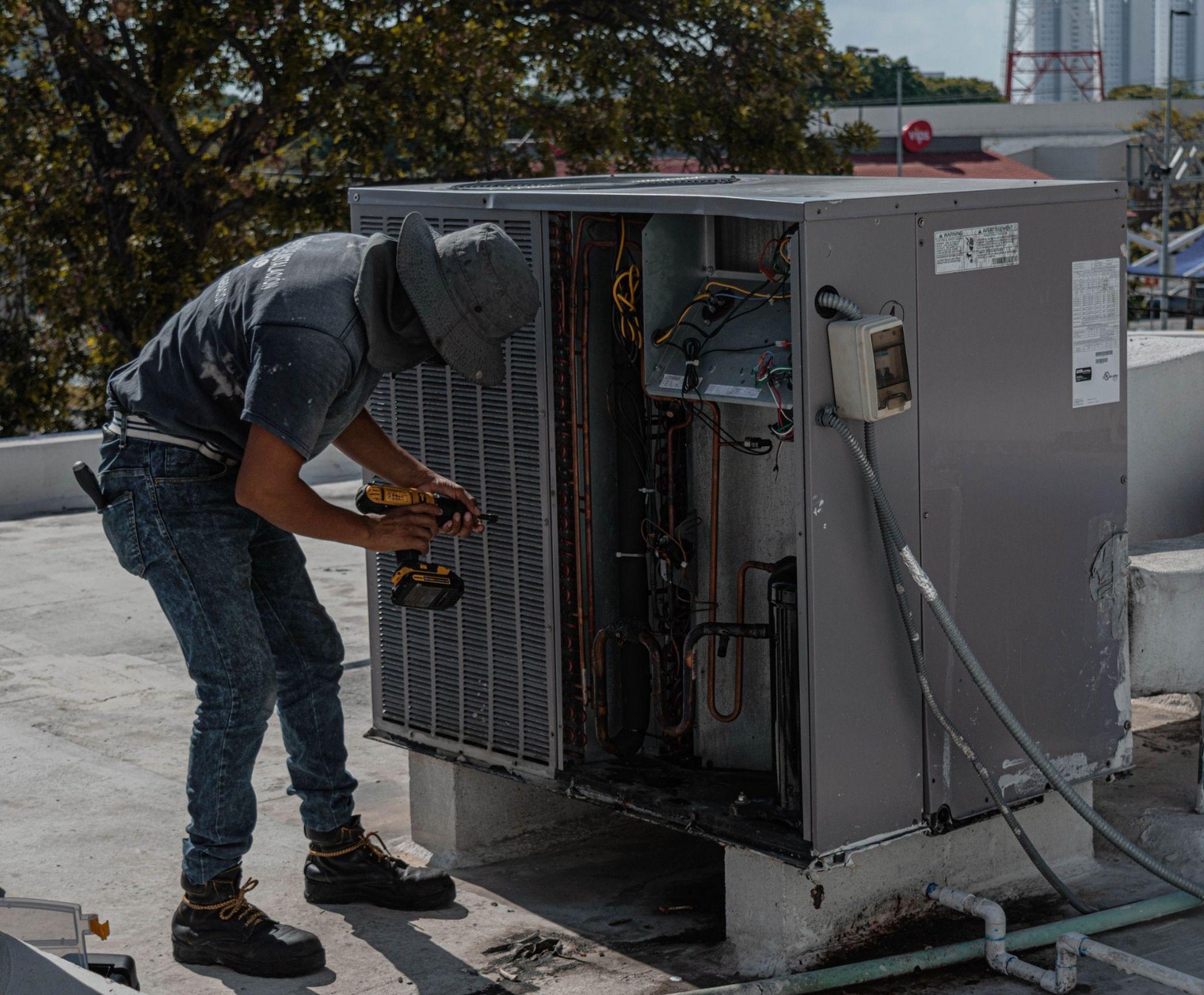
The unsexy last step: schedule a professional tune-up. Not because you can't handle most of what's above yourself, you can, but because a tech with gauges can read superheat and subcool numbers that tell us whether the refrigerant charge is right, whether the metering device is healthy, and whether the capacitor is sliding toward failure.
A capacitor that reads 38 microfarads when it's rated for 45 is going to die in August, not April. Replacing one in a driveway in 95-degree weather runs about $200 with a service call. We charge the price of the part on a tune-up appointment. The math isn't subtle.
The bottom line for Turlock summers
Turlock is a forgiving town in a lot of ways, but its summers are not. A 95-degree June in Modesto is a 99-degree June here, because we're closer to the open Valley floor with less canopy. Spend a Saturday morning on the steps above and you'll skip the panic call, the after-hours fee, and the week of sleeping in the living room next to a portable A/C. That's the whole pitch.
Get Ahead of Summer
Don't wait for the first 100°F day to find out what's weak in your system. Schedule a pre-summer tune-up today and skip the emergency call, the after-hours fee, and the wait for a backordered unit.
Key Takeaways
- • Most AC failures happen because a weak component that survived last September finally gives out on the first hot day, not because of sudden damage.
- • Condensers need 2 feet of clearance on all sides and 4 feet above to avoid overheating the compressor.
- • A blocked coil is the top cause of high refrigerant pressure in spring, and it's free to fix with a garden hose.
- • Filters should be swapped every 30-60 days in summer depending on pets and location.
- • A vinegar flush on the condensate line prevents the most common July emergency: an overflowing drain pan shutting down the system.
- • Thermostats set 20–22°F below outdoor temperature are realistic; anything more just runs the system nonstop for nothing.
- • Systems over 12 years old should get a load calculation and replacement decision in April, not July, due to backorder delays.
Why does my AC always seem to fail on the first hot day of the year?
It usually doesn't fail suddenly. A weak component limped through the previous summer, sat unused all winter, and gives out under the load of the first real heat wave.
How much clearance does my condenser unit need?
At least 2 feet of open air on all sides and 4 feet above it. Bushes, fences, and debris restrict airflow and force the compressor to run hotter.
How often should I change my AC filter in Turlock?
Every 60 days during summer for a standard 1-inch filter, or every 30 days if you have pets or live near an open field. Media filters last 6 months to a year.
What temperature should I realistically set my thermostat to in summer?
Expect your system to hold roughly 20-22°F below the outdoor temperature. On a 105°F day, that means 78-80°F is a realistic indoor target, not 68°F.
My AC is over 12 years old, should I wait until it fails to replace it?
No. Replacement units can be backordered 4-8 weeks during peak season. Getting a load calculation and decision made in April avoids being without AC for weeks in July.