
Ceres, Stanislaus County — HVAC Guide
Ceres Tract Homes: When 14 SEER Becomes a Liability
A decade in, builder-grade Ceres systems are hitting their wall. Here's what to watch for, why it's happening street by street, and what smart homeowners are doing next.
Key Takeaways
- • Most Ceres tract A/Cs installed between 2010–2014 carry a 14 SEER builder-grade rating, and failure rates climb sharply once a unit passes the 10-year mark.
- • Bonus rooms over garages are the #1 comfort complaint in Ceres poor insulation, the longest duct run, and maximum sun exposure make them run 8–10°F hotter than the rest of the house.
- • A single ductless mini-split head usually solves a hot bonus room without re-ducting the entire house.
- • Newer Don Pedro Road tracts sit on shadeless lots a radiant barrier and attic-fan upgrade can meaningfully cut runtime before you touch the equipment.
- • If your system dates to 2008–2012, you're in the heat-pump conversion sweet spot one system for both heating and cooling, with modern warranty coverage.
Same Street, Same Condenser, Same Countdown Clock
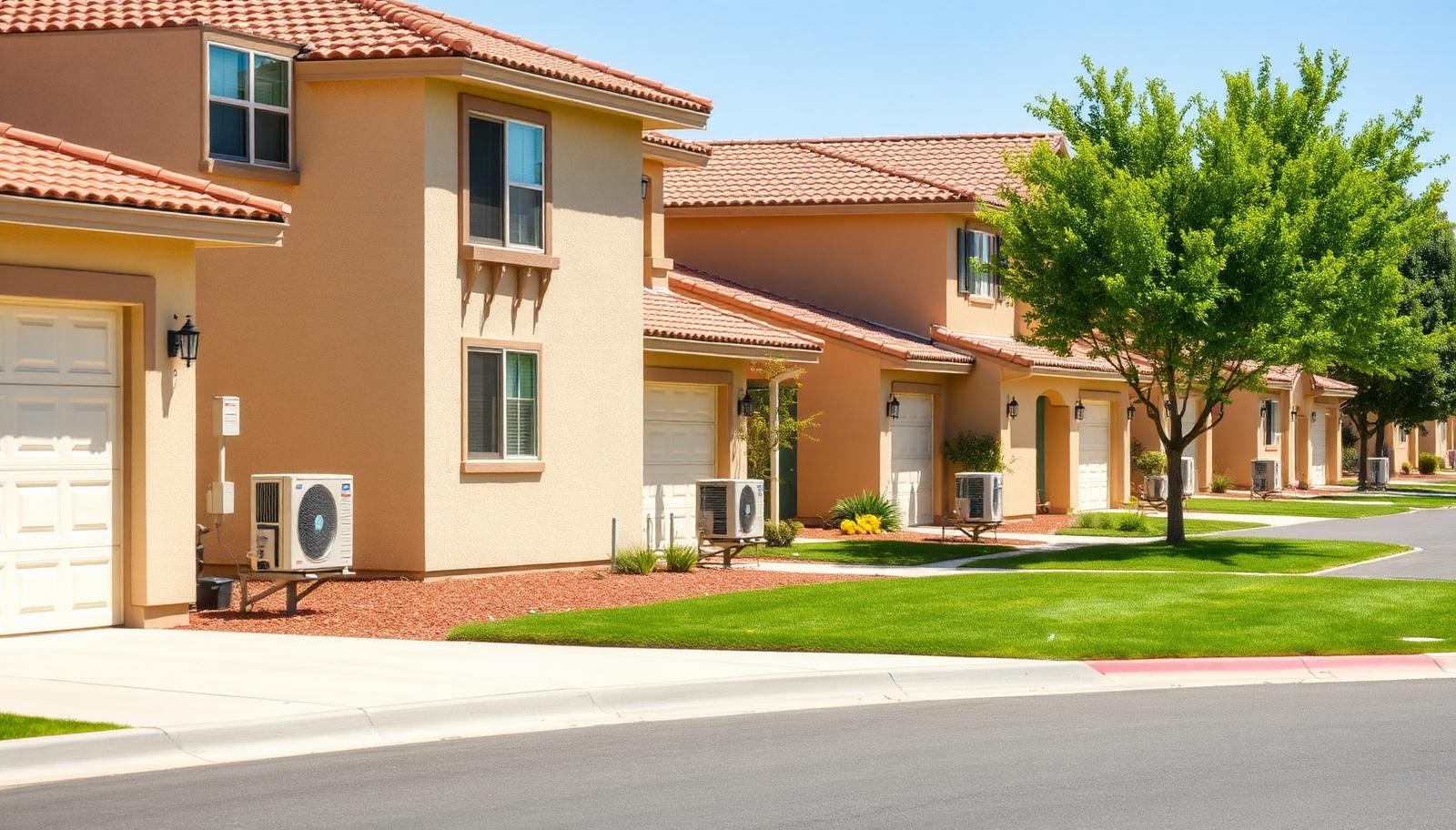
If you've searched for reliable heating and cooling services in California, chances are you already suspect what this guide confirms. Drive any street in Eastgate or Smyrna Park and you'll notice something the neighbours haven't quite clocked yet: the exact same condenser, on the exact same slab, outside nearly every third house.
That's not a coincidence it's a subdivision built on a schedule, with an HVAC contractor working off a spec sheet designed to hit a schedule, not a lifespan. Those units were installed quickly, sized to the bare minimum, and are now 12 to 14 years old. And in Evolution Heating & Cooling's service calls across Ceres this year, they aren't failing one at a time. They're failing in batches, on the same streets, within weeks of each other, like a warranty clock everyone forgot was ticking.
If your system was installed during the Ceres tract boom, it's worth reading this before your unit picks the hottest week of August to make its final statement. Below, we walk through the three things we see most in Ceres a wearing-out A/C, a bonus room nobody can cool, and a new-construction lot with zero shade and the fix that actually works for each one.
The 14 SEER Countdown: Why So Many Ceres Units Are Failing at Once
Builder-grade doesn't mean bad it means built to a spec sheet, and every corner cut in 2010 shows up as a service call in 2026. Compressors sized at the minimum tonnage for the square footage run harder and longer on 100°F-plus Central Valley afternoons, which is exactly the kind of stress that shortens a system's life. It's also worth noting that federal minimum efficiency standards have climbed steadily since these units were installed today's baseline, per ENERGY STAR's efficiency guidelines, is well above the 14 SEER rating most Ceres tract homes were built with. The result: a wave of 14 SEER units clustered in the same handful of subdivisions, all approaching failure at roughly the same time.
The chart below reflects the pattern our technicians see across Ceres, Turlock, and Modesto tract homes: failure risk stays low for the first several years, then climbs fast once a system crosses the 10-year threshold.
Builder-Grade 14 SEER Failure Curve in Central Valley Tract Homes
| System Age | Share of builder-grade 14 SEER units reporting a major repair or failure |
|---|---|
| Yr 8 | 8% |
| Yr 9 | 14% |
| Yr 10 | 22% |
| Yr 11 | 34% |
| Yr 12 | 48% |
| Yr 13 | 63% |
| Yr 14 | 78% |
Source: Evolution Heating & Cooling service-call data, Turlock/Ceres/Modesto service area (illustrative trend)
Failure risk for builder-grade 14 SEER systems climbs sharply after year 10 — right where most Ceres tract-home units sit today.
The reliability pattern is only half the story. Once a builder-grade unit passes that mark, the failures also get harder to plan around: parts for decade-old models take longer to source, and a breakdown almost always lands during the first serious heat wave rather than in mild spring weather.
That's why we treat age and repair history together. A 14 SEER unit at year 12 with two service calls behind it is a different conversation than the same unit at year 8 running clean.
The Bonus Room Curse (and Why Re-Ducting Isn't the Fix)
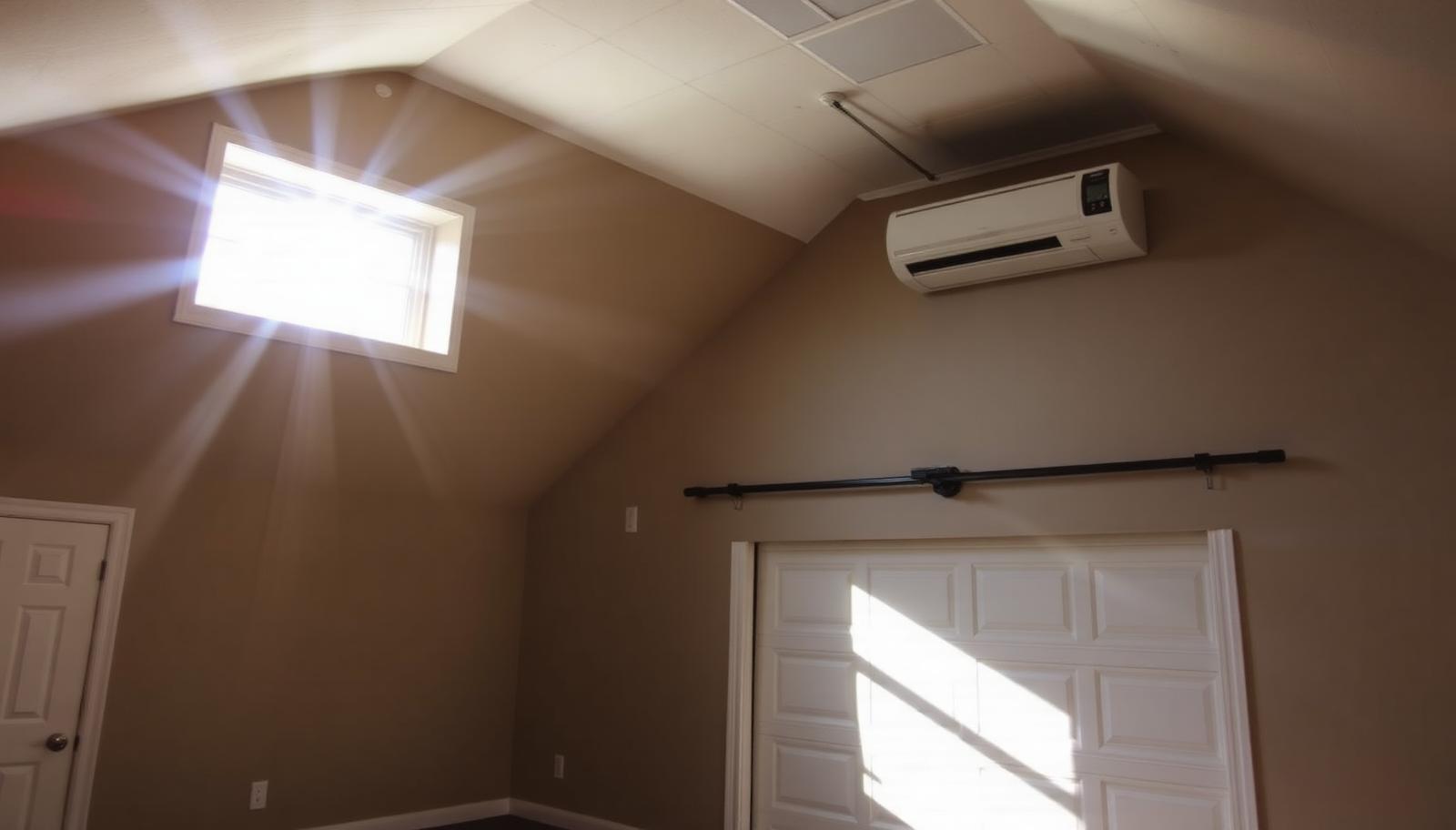
If there's one room in a Ceres tract home that generates a customer call every single July, it's the bonus room over the garage. It's the room builders squeezed in as a value-add extra square footage, minimal insulation, tacked onto the end of the longest duct branch in the house. It also usually has the worst exterior wall ratio of any room on the floor plan, meaning more surface area exposed to direct sun with less airflow reaching it.
Why the Bonus Room Always Runs Hot
| Room | Temperature |
|---|---|
| Living Room (1st floor) | 74°F |
| Main Bedroom (2nd floor) | 76°F |
| Bonus Room over Garage | 84°F |
Illustrative comparison for a typical two-story Ceres tract home with a bonus room over the garage on the longest duct run.
On a typical 105°F Ceres afternoon, the bonus room over the garage runs noticeably hotter than the rest of the house.
The instinctive fix re-ducting the whole house to push more air to that one room is expensive, invasive, and often doesn't solve the problem anyway, because the room's real issue is insulation and duct distance, not just airflow volume. In roughly 9 out of 10 Ceres homes we evaluate, a single ductless mini-split head mounted directly in the bonus room fixes the problem permanently, for a fraction of a full re-duct, with zero disruption to the rest of the home's system.
New Don Pedro Road Tracts: Full Sun, Zero Shade, 20 Years to Go
The newer construction along the Don Pedro Road corridor comes with its own version of the same problem, just earlier in the timeline. These lots are graded and built with essentially no mature trees, which means every roof and west-facing wall takes direct sun with no relief for the next two decades. Attic temperatures spike, ductwork sitting in that attic absorbs the heat, and the A/C ends up fighting a losing battle before the air even leaves the vent.
The good news: you don't need new equipment to make a real dent in that runtime. A radiant barrier installed in the attic reflects a meaningful share of that heat before it ever reaches the ductwork, and pairing it with an attic-fan upgrade actively exhausts what does get through. Both pair well with your existing system and are worth doing before not after you replace equipment that was never the actual problem.
| Comfort Problem | Common (Wrong) Fix | Better Fix |
|---|---|---|
| Hot bonus room over garage | Full house re-duct | Single ductless mini-split head |
| Shadeless new-construction lot | Oversized new A/C | Radiant barrier + attic-fan upgrade |
| Aging 14 SEER system, 10+ yrs | Repeated patch repairs | Heat pump conversion |
The 2008–2012 Sweet Spot for Heat Pump Conversion
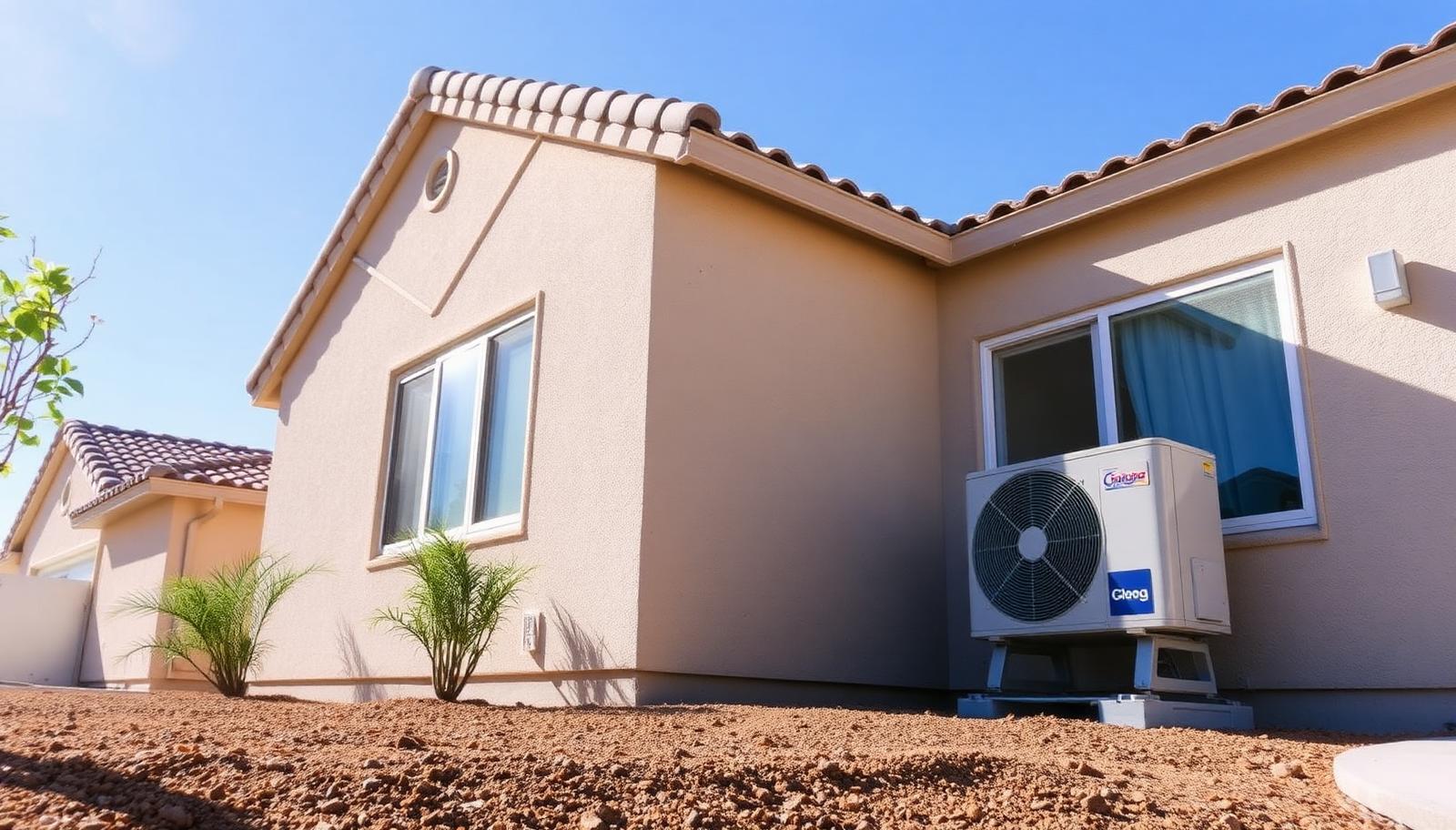
If your Ceres tract A/C dates to somewhere between 2008 and 2012, you're sitting in what we call the conversion sweet spot. The unit is old enough that a major failure is a real risk, and the timing lines up well with making a single planned upgrade instead of reacting to a mid-August breakdown. As the U.S. Department of Energy explains, modern heat pumps can deliver both heating and cooling from a single high-efficiency system. For most Ceres tract homes, a heat pump conversion makes more sense than a like-for-like A/C replacement you get efficient cooling in summer and efficient heating in winter from one system, instead of maintaining a separate furnace on its own aging timeline.
What a Heat Pump Conversion Changes in a Ceres Tract Home
- • One system handles both summer cooling and winter heating, so there's no aging furnace waiting to fail on its own schedule.
- • Variable-speed operation holds a steadier temperature through 105°F afternoons instead of cycling hard on and off.
- • Quieter outdoor operation, which matters on the tight lot lines common in Ceres subdivisions.
- • Modern refrigerant and full manufacturer warranty coverage replace a parts-hunt on a decade-old builder-grade unit.
This is exactly the kind of decision worth getting a second opinion on before you commit a technician who actually walks your attic and measures your duct runs will give you a far more accurate answer than a phone estimate ever could.
What to Do If You Recognize Your House in This Guide
Ceres homes built during the tract boom are reaching the point where a small repair can turn into a much bigger decision almost overnight. Whether that's a wheezing 14 SEER condenser, a bonus room that never quite cools down, or a shadeless new-build lot working against you, the fix is rarely "replace everything." It's usually one targeted upgrade, chosen for your specific house rather than a generic spec sheet.
That's the approach the team at Evolution Heating & Cooling takes with every Ceres inspection: look at the actual house, not just the age on the nameplate. As a family-owned, licensed and insured provider of heating and cooling services in California, we've walked enough Eastgate, Smyrna Park, and Don Pedro Road attics to know which fix actually solves the problem versus which one just delays it. If your system fits the profile above, a free diagnostic is the fastest way to find out where you stand before the next heat wave decides for you.
How do I know if my AC is dying or just needs a repair?
Age and repair frequency matter more than any single symptom. If your system is under 10 years old and needs a minor repair, fixing it usually makes sense. Past the 10-year mark especially for the builder-grade 14 SEER units common in Ceres tracts repeated service calls are usually a sign the system is winding down rather than something a single repair will settle.
Is it worth switching from an air conditioner to a heat pump?
For most Central Valley homes with an aging A/C and a separate furnace, yes a heat pump handles both heating and cooling from one efficient system, which means one piece of equipment to maintain instead of two on separate aging timelines.
Why is only one room in my house always too hot?
A single hot room especially a bonus room over a garage is almost always a combination of poor insulation, a long duct run, and high sun exposure, not a sign your whole HVAC system is failing. A dedicated ductless mini-split head for that room is typically far more effective than re-ducting the entire home.
How long should an HVAC system last in a Ceres tract home?
In Central Valley heat, builder-grade systems sized to the minimum for the square footage typically run 10 to 15 years before major issues appear. Regular maintenance, clean ductwork, and attic heat control all push that number toward the upper end, while long 100°F-plus runtimes push it lower.
Is your Ceres system on the 14 SEER countdown?
Get a free diagnostic from a technician who walks your attic and measures your duct runs.